

about
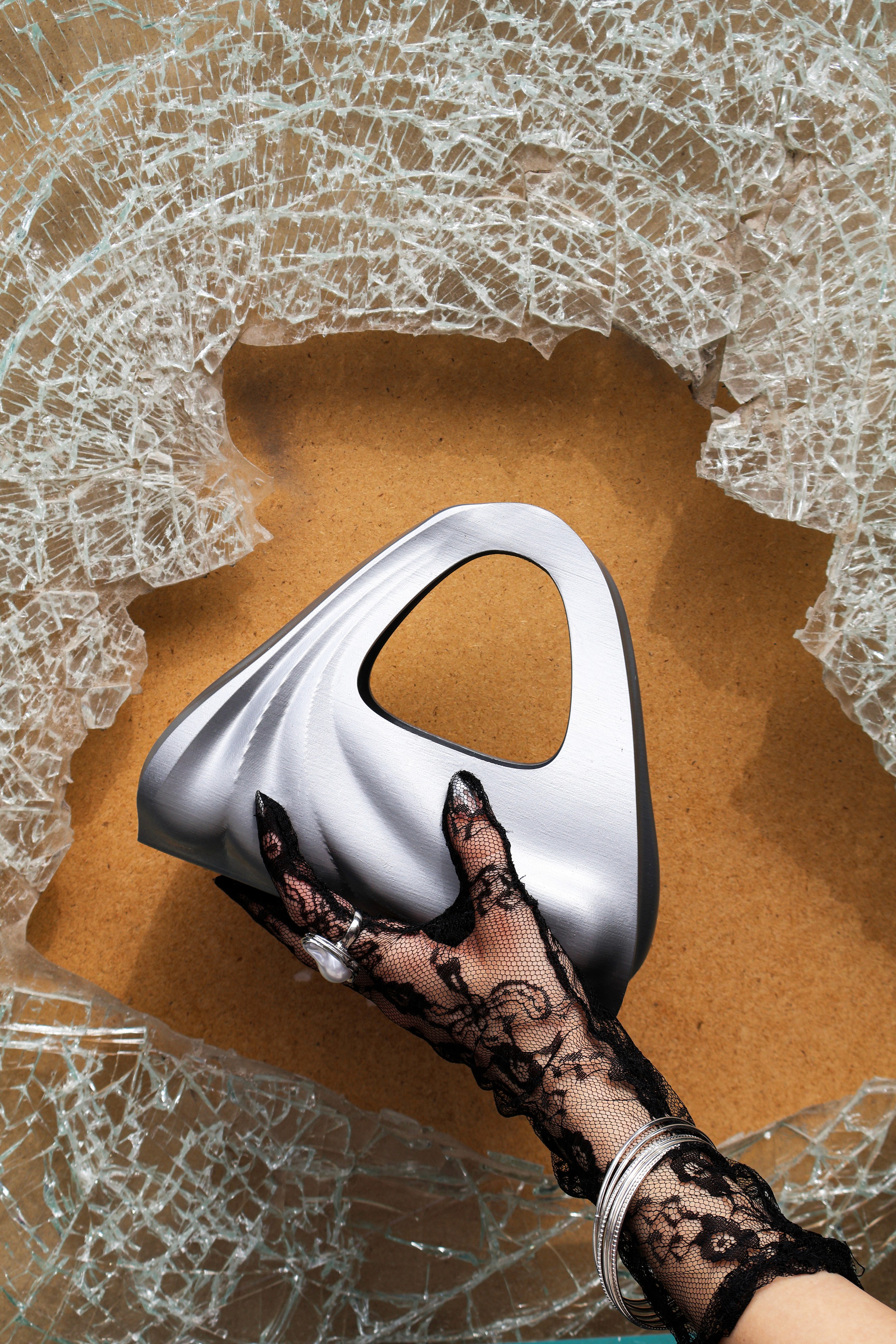
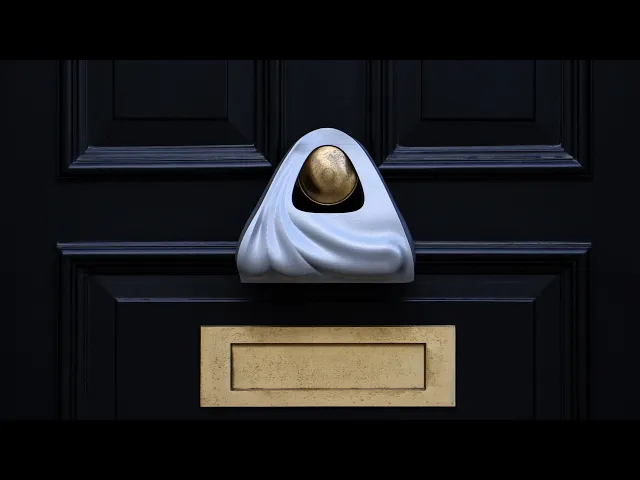
The Wave Bag explores how architectural and parametric thinking can move beyond the scale of buildings and into objects that interact directly with the body. Developed through Rhinoceros and Grasshopper, the project transforms a continuously evolving surface into a functional yet sculptural wearable object.
The name Wave describes the behavior of the surface rather than a literal reference to water. Controlled curvature, deformation, and continuity allow the body, opening, and integrated handle to emerge from the same geometric language.
The Grasshopper model operates as an open parametric system, where changes in proportions, displacement, and curve behavior can generate new variations. The physical prototype is therefore one materialized moment within a larger family of possible forms.
The selected iteration was produced through FDM 3D printing using a Bambu Lab X1 Carbon, requiring almost 16 hours of continuous fabrication. Watching the material accumulate layer by layer introduced another way of reading the process: as a form of machine weaving.
For centuries, textiles and surfaces have been constructed through repetition and accumulation. Here, the thread is replaced by filament and the movement of the hand by a digitally controlled machine, creating a shared logic of precision, repetition, and time.
After printing, the prototype was manually sanded and refined, then finished with primer, metallic chrome coating, and a protective clear layer. These stages became part of the final sculptural character of the object.
The resulting bag sits between a functional accessory and a sculptural object, combining computational design, machine fabrication, material, and handcraft.
As an ongoing parametric study, The Wave Bag remains open to further variations in geometry, fabrication, and material.
The bag may be complete, but the wave is not.
credits
Designer
Buse Yagci


